Opening a bank account in Mexico as a foreign resident is a crucial step in establishing financial independence and ease while living in this thriving country. Whether you’re relocating for work, retirement, or embracing the remote working lifestyle in popular destinations like Playa del Carmen, Tulum, Cancun, or the Riviera Maya, having a Mexican bank account simplifies many financial transactions. Local accounts eliminate hefty fees associated with international cards, minimize currency conversion losses, and allow smoother payment processing for rent, utilities, and other expenses. However, navigating the Mexican banking system requires awareness of updated regulations, residency requisites, and how identification documents must be presented in 2026. This detailed guide is designed to help you open the right bank account, understand the types of accounts on offer, and make informed decisions based on your residency status and financial needs.
Key factors to consider include the type of resident visa you hold, the specific bank requirements for foreign residents, and the set of identification documents you must prepare. Mexico’s banking regulations have become more stringent in recent years—largely to comply with anti-money laundering laws—making proper documentation and patience assets in the process. Additionally, choosing the right financial institution can significantly influence your banking experience as an expatriate; some banks offer user-friendly digital platforms and lower fees, while others specialize in catering to international clients with global connectivity. Understanding these nuances can prevent frustration and streamline your transition into Mexico’s financial ecosystem.
- Residency Status: Most Mexican banks require a valid resident visa (temporary or permanent) to issue full-service accounts.
- Documentation: Essential documents include a valid passport, residency card, proof of address, and the Mexican tax ID number (RFC).
- Bank Selection: Top banks for foreigners include BBVA México, Banorte, HSBC, and Santander, each with unique benefits.
- Account Options: Choices range from checking and savings to investment accounts tailored to your financial goals.
- Alternative Solutions: Fintech services and limited-tier accounts cater to tourists or those without residency status.
Understanding Residency Requirements and Bank Regulations for Foreign Residents in Mexico
One of the most critical considerations when attempting to open a bank account in Mexico as a foreign resident is understanding the implications of your residency status. The Mexican banking system categorizes clients primarily by whether they possess a legal resident visa—either a Residente Temporal (temporary resident) or Residente Permanente (permanent resident)—or if they are simply tourists. In 2026, Mexican banks have streamlined their compliance measures under updated financial regulations, requiring clear proof of residency before opening standard accounts with full access to banking services.
For foreign residents holding either a temporary or permanent resident visa, the path to opening accounts at leading banks like BBVA México, Banorte, or HSBC is straightforward, provided you meet the documentation requirements. These institutions require the presentation of your resident card, a valid passport, an official proof of address, and your tax identification number (RFC). The reason for emphasizing residency is that it verifies your legal and fiscal presence in Mexico, allowing the bank to maintain compliance with banking regulations designed to prevent fraud and money laundering.
Tourists, identified by the Forma Migratoria Múltiple (FMM) permit, face more restrictions. While a few banks may offer simplified accounts with limited features and caps on monthly deposits, full-service banking is mostly unavailable without proper residency documentation. To bridge this gap, many foreign visitors turn to fintech companies offering digital wallets and multi-currency cards, allowing currency exchange and payments in pesos without a traditional Mexican bank account.
These residency stipulations influence every aspect of a foreigner’s banking experience in Mexico. Notably, the recent enforcement of requiring the RFC tax ID number—officially implemented across most banks by late 2024—means applicants must start early by securing their residency card, obtaining their CURP (Clave Única de Registro de Población), and finally applying for the RFC at the SAT (Servicio de Administración Tributaria). This process can take several weeks, depending on your location, and is essential for integrating fully into Mexico’s formal financial structure.
Understanding the practical consequences of residency on your banking options also helps in planning your financial moves, especially if you intend to invest in Mexican real estate or conduct regular business transactions. For example, to discover more about whether you need a Mexican bank account to purchase property in Playa del Carmen, consider consulting specialized guides for expatriates and real estate investors, which address banking as part of the bigger picture of relocation and property ownership in the Riviera Maya.
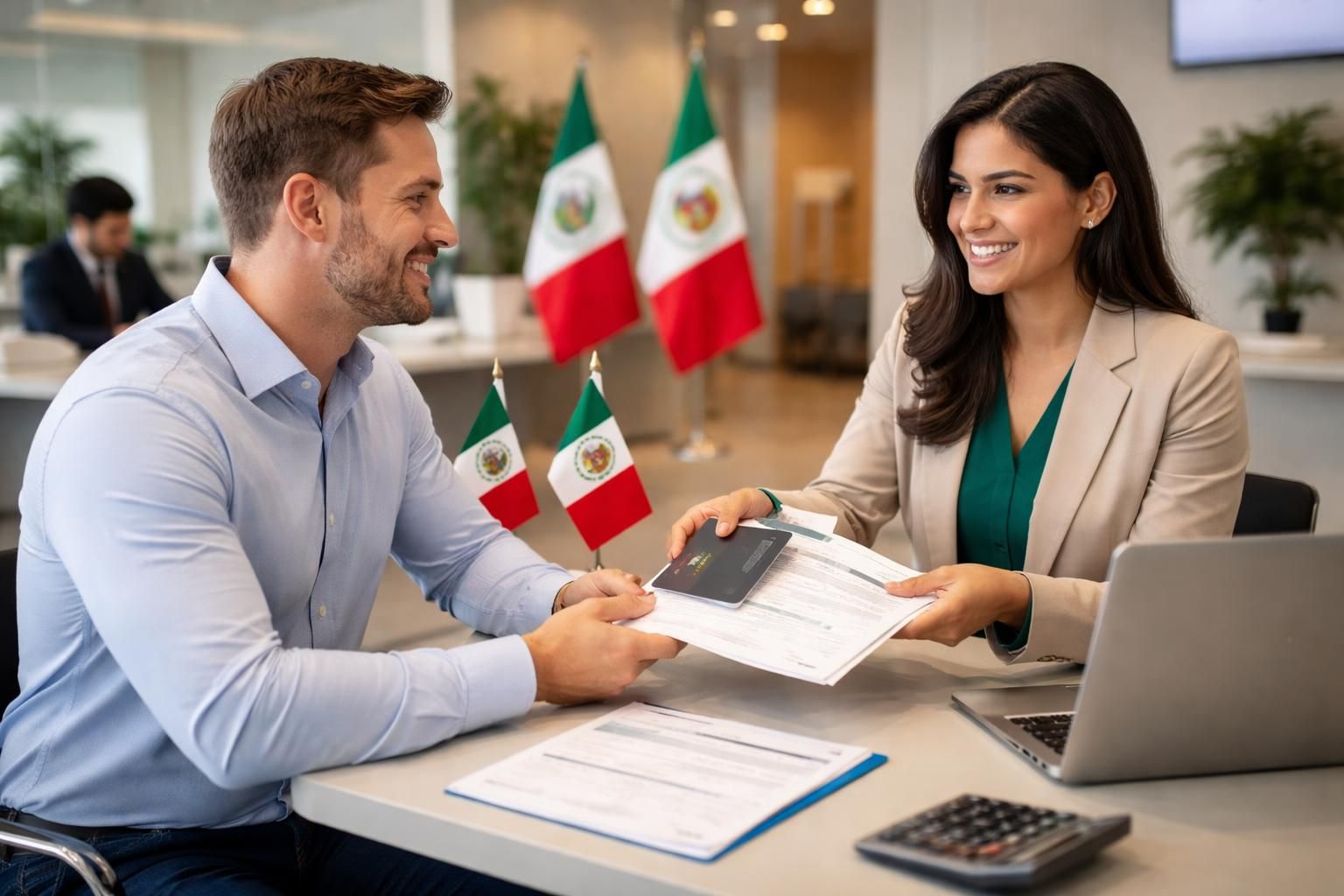
Essential Documents for Opening a Mexican Bank Account as a Foreign Resident
The cornerstone of successfully opening a bank account in Mexico lies in having the correct set of identification documents. Mexican banks have tightened requirements to conform with international banking standards and local financial regulations. This means, in 2026, being fully prepared with official and recent documents can save you from repeated branch visits and processing delays.
Here is a detailed checklist of the identification documents typically required:
- Valid Passport: Your main identification proof, this must be current and unexpired.
- Resident Visa Card: Residente Temporal or Permanente documents issued by the National Migration Institute. Some banks accept a NUT (Número Único de Trámite) slip when the card is in process, though many do not.
- Proof of Mexican Address: Usually a recent utility bill such as electricity (CFE is preferred), water, or telephone bill dated within 90 days. Acceptance criteria vary by bank branch, with some requiring the document to be in the account holder’s name, while others accept declarations from roommates or neighbors.
- Mexican Tax ID (RFC): Mandatory for full-service accounts, obtained at the SAT with CURP as a prerequisite. The RFC serves as Mexico’s taxation identifier and is essential for linking your financial activities to the country’s tax system.
- Mexican Phone Number: To enable account activation, app login, and SMS verification, banks require a local mobile number.
- Minimum Deposit: Most banks require an initial deposit, typically around MXN 1,000 (approximately USD 50), but this amount can vary.
It is important to note that requirements may vary slightly depending on the bank and even the specific branch. Banks such as BBVA México tend to have more standardized procedures, especially in expatriate-friendly areas like Cancun and Playa del Carmen, while smaller or regional banks may exercise more discretion in their application of rules. To maximize your chances of approval on your first visit, bring original documents plus several copies for submission and review.
This standardized process also extends to account types, where proof of sufficient documentation unlocks access to a wider variety of options, including investment and checking accounts. Conversely, minimal documentation leads to limited banking solutions, usually without credit facilities or international transfers.
Comparing Top Mexican Banks for Foreign Residents and Account Types in 2026
Choosing the proper financial institution is as important as fulfilling the documentation requirements when you decide to open a bank account in Mexico as a foreign resident. The banking landscape in Mexico offers a variety of institutions that cater differently to expatriates, with some excelling in digital banking, while others emphasize branch accessibility and customer support.
The table below compares the key characteristics of major banks suitable for foreign residents, highlighting account services, fees, and friendliness towards non-citizens.
| Bank | Residency Required | Account Types Available | Initial Deposit | Monthly Fees | Digital Banking Quality | Ease of Opening for Foreigners |
|---|---|---|---|---|---|---|
| BBVA México | Residente Temporal or Permanente | Checking, Savings, Investment | MXN 1,000 | Free for some accounts, varies | High-quality app & services | High (expat-friendly branches) |
| Banorte | Residente Temporal or Permanente | Checking, Savings | MXN 1,000 | Varies, some waivers with min. balance | Moderate | Moderate to high |
| HSBC México | Residente Temporal or Permanente | Checking, Savings | MXN 1,000+ | Younger accounts may have fees waived | Good, with international links | High (preferred for global account holders) |
| Santander México | Residente Temporal or Permanente | Checking, Savings | Varies by account | Varies | Good | High |
| Banco Azteca | Tourist or resident | Simplified Accounts | Low minimum deposit | Varies | Basic | Low to moderate |
BBVA México stands out for expats due to its pervasive presence in tourist and foreigner-populated regions like Playa del Carmen and Cancun, offering a great mobile app and relatively streamlined verification. Banorte excels in national coverage and flexibility with proof of address, useful for residents outside of major metropolitan zones. Meanwhile, HSBC appeals to those with existing international banking ties. Tourists or those without residency can explore simplified accounts at Banco Azteca or alternative fintech solutions which offer multi-currency cards without strict document requirements.
For extensive insights on whether a Mexican bank account is required for purchasing property, or if alternative financial plans are possible, consult expert real estate resources specialized in the Riviera Maya region to tailor your banking and investment strategy accordingly.
Step-by-Step Process to Open a Bank Account in Mexico as a Foreign Resident
Once your documents are prepared and you’ve selected the bank best suited to your needs, the final phase is the actual process of opening your bank account. This typically requires an in-person visit to the selected branch, as biometric verification and physical identity checks are mandatory under banking regulations.
Here’s a clear sequence to follow for a smooth account opening:
- Schedule an Appointment or Arrive Early: Many banks recommend booking an appointment, but walk-in service is often available at opening hours. It’s advisable to arrive early to avoid long waiting times, especially in high-demand areas like Playa del Carmen and Cancun.
- Bring All Required Documents: Present original and copies of your valid passport, resident visa, proof of address, RFC, and Mexican phone number details.
- Complete the Application Forms: Provide accurate personal and financial information. Bank staff may explain account options and fees during this phase.
- Make Your Initial Deposit: Most accounts require a minimum deposit of roughly MXN 1,000 to activate the account.
- Biometric and App Setup: You will undergo fingerprint scanning and facial recognition. Bank staff will guide you through downloading and activating the banking app on a phone with a Mexican SIM card, crucial for secure access and SMS verification.
- Confirm Account Details and Fees: Verify the account type opened and associated charges. Ask for fee waivers or alternatives if monthly maintenance fees seem high.
- Receive Debit Card: Depending on the bank, you may get your debit card immediately or within a few days.
The entire process often takes between one to two hours. If you face any difficulties or rejections, don’t hesitate to try a different branch of the same bank, preferably in areas with a sizeable expat population, as policies may be interpreted differently.
For newcomers to the region, managing your finances also involves familiarizing yourself with online banking features and ATM networks, ensuring minimal withdrawal fees and transparent transaction histories. If you want to understand the typical duration and obstacles involved in real estate transactions linked to banking, consider reading our guide on how long it typically takes to close on property in Playa del Carmen, which highlights the role local banks play in property purchases.
Managing Your Bank Account and Protecting Yourself from Financial Issues in Mexico
Opening a bank account is just the beginning of your financial journey in Mexico. Proper account management is essential for optimizing your experience and safeguarding against potential missteps in a foreign financial environment.
Mexican banks offer comprehensive online banking platforms that facilitate daily operations such as balance checks, bill payments, transfers, and managing debit cards. Most major banks have dedicated mobile apps with full functionality, enabling seamless control regardless of your location within Mexico.
When dealing with banking fees and charges, it is vital to verify the specific conditions associated with your account type. Many branches enroll clients in fee-bearing accounts by default. Always ask how to qualify for fee waivers or reduced service charges by maintaining minimum balances or signing up for direct deposits.
Should you encounter unauthorized transactions, poor customer service, or discrepancies with your account, Mexico’s financial consumer protection agency, CONDUSEF, is your resource for complaints and resolutions. This agency provides mediation services and maintains public statistics on banking complaints, fostering accountability across institutions.
Lastly, keeping your Mexican bank account credentials secure, updating your contact information promptly, and maintaining regular communication with your bank help prevent potential fraud and service interruptions. For those new to life in Mexico, integrating these financial management practices creates stability and confidence while adapting to your new environment.
To navigate residency requirements further after property acquisition or to understand the nuances of holding a Mexican bank account remotely, also explore our step-by-step relocation guidance and residency processes tailored for expats choosing this vibrant region as their home.
Can a foreigner open a bank account in Mexico without a resident visa?
Generally, full bank accounts require a temporary or permanent resident visa. Tourists can only access simplified accounts with limited features or use fintech alternatives for basic banking needs.
What are the required documents to open a bank account in Mexico as a foreign resident?
You must provide a valid passport, resident visa card (Residente Temporal or Permanente), official proof of address such as a recent utility bill, RFC tax ID, and a local Mexican phone number.
Is an RFC (tax ID) mandatory for opening a bank account in 2026?
Yes, most major Mexican banks require an RFC for full-service accounts. To obtain an RFC, you must first get your CURP and schedule an appointment at SAT.
Are there monthly fees for Mexican bank accounts?
Many accounts carry monthly maintenance fees, but these can often be waived by maintaining a minimum balance or meeting other bank-specific criteria. It is crucial to clarify fee structures with your branch.
Can I open a Mexican bank account remotely from abroad?
No. Due to biometric requirements, most banks mandate in-person account opening. However, fintech platforms offer some remote alternatives that do not require residency.