Buying real estate in Mexico is not just about owning a piece of paradise; it also opens the door to an opportunity that many expatriates find appealing—obtaining Mexican residency. Navigating the immigration process requires a clear understanding of visa types, financial thresholds, and specific legal requirements tied to property purchase. For those eyeing the coastal allure of Playa del Carmen, Tulum, or Cancun, comprehending how real estate investment intersects with Mexican residency is key to making smart, informed decisions.
This article breaks down the complexities tied to residency applications following a property purchase, offering a practical, step-by-step guide aimed at simplifying your path to securing legal residency status in Mexico. From differentiating between temporary and permanent visas to understanding financial qualifications and satisfying documentation demands, homeowners and buyers will learn how to align their real estate investments with immigration goals effectively.
For anyone considering buying property in Mexico and seeking to establish a legal foothold, this guide provides essential insights to help you navigate the process with confidence. It also sheds light on how residency linked to real estate purchase compares with other eligibility pathways, and what to expect during application timelines, renewals, and residency benefits.
Understanding the Difference Between Temporary Residency and Permanent Residency After Buying Property in Mexico
Many property buyers initially qualify for temporary residency when entering the Mexican immigration system, largely because it requires meeting lower financial thresholds and is more accessible across consulates. This visa generally grants residency for one to four years and serves as a gateway to permanent residency. Most individuals holding a temporary resident visa spend this period familiarizing themselves with local living, while preparing to meet the requirements for permanent residency.
Permanent residency in Mexico, however, offers indefinite living rights and additional privileges such as the ability to work freely. Some buyers opt to apply directly for permanent residency. To pursue this route immediately after purchasing property, investors must show higher income or asset levels—often significantly above the thresholds required for temporary visas. This can be attractive for those committed to making Mexico their long-term home from the outset.
An important point to remember is that Mexican citizenship requires at least five consecutive years of residency, including some time as a permanent resident. Temporary residency alone, valid for up to four years, resets this clock if renewed multiple times without transitioning to permanent status. Thus, property owners seeking the fastest route to citizenship should plan accordingly.
The following table illustrates the fundamental differences between these two residency types related to property purchase:
| Residency Type | Validity | Work Authorization | Residency Renewal | Path to Citizenship |
|---|---|---|---|---|
| Temporary Residency | Up to 4 years | Restricted, usually no local work allowed | Renewable annually | Not directly eligible until permanent residency |
| Permanent Residency | Indefinite | Allowed | No renewal required | Eligible after 5 years of consecutive residency |
With property investments serving as a key qualifying factor, understanding these residency distinctions will enable buyers to align their immigration strategy effectively. For instance, some consulates allow purchasing real estate at values above approximately $218,000 USD (under the Mexican minimum wage measure) or $437,000 USD (using the UMA economic index) to qualify for temporary residency directly after purchase.
The immigration process typically begins at your home country’s Mexican consulate, where you will submit financial evidence related to your property investment—either through direct ownership or via a fideicomiso trust if buying property within Mexico’s restricted zones. Once approved, your visa will allow one-time entry into Mexico, where you must convert your visa to a residency card within 30 days through the Instituto Nacional de Migracion (INM).
Buying real estate in Mexico creates tangible benefits beyond residency, but it’s also essential to consult with experts, not only to handle the immigration application but also to navigate complexities around property transfer and ownership rights — for instance understanding the role of a Notario Publico vs. real estate lawyer in Mexico. Being informed ensures that your property purchase and residency application run smoothly in parallel.
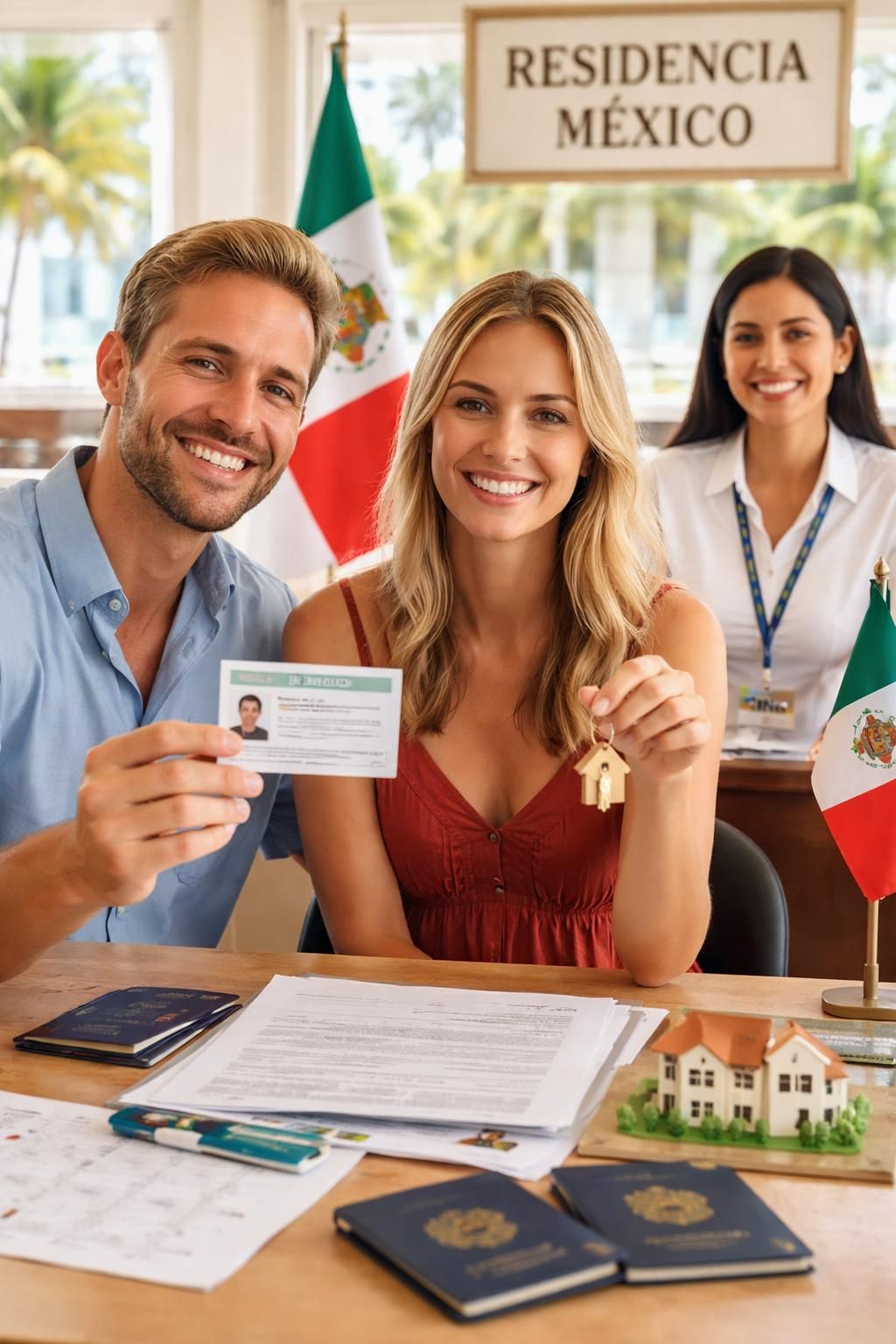
How Real Estate Investment Qualifies You for Mexican Residency: Financial and Legal Requirements Explained
To qualify for Mexican residency linked to real estate investment, applicants generally must demonstrate sufficient financial standing. This is typically proven by showing ownership or title deeds to a property that meets minimum investment values, alongside acceptable proof of income or assets.
The valuation requirements depend on whether the consulate applies the Salarios Minimos (SM), which is Mexico’s minimum wage index, or the Unidad de Medida y Actualización (UMA), a broader inflation-adjusted economic unit used for many governmental calculations. For example, consulates using the SM may require proof of property purchase at a value close to $218,000 USD, while those using UMA might set that at about $437,000 USD. These differing benchmarks reflect ongoing regulatory nuances that can change annually, so staying updated is critical.
Financial qualification extends beyond the property itself. Applicants must also display monthly income or savings that ensure they won’t need to work illegally in Mexico. Typically, this includes pension income, investment earnings, or other passive sources. Some consulates have flexibility in how income or assets must be demonstrated, but all require official documentation, frequently accompanied by apostilles or notarized translations.
It is crucial to factor in tax implications stemming from your real estate acquisition as they relate both to your investment and your residency application. For instance, understanding capital gains tax rules can significantly impact your financial planning, especially if you intend to resell the property in the future.
Once the visa application is submitted and approved, you will receive a visa sticker for entry, allowing you to finalize your legal residency process within Mexico. Key follow-up steps include obtaining your resident card from the INM, which serves as official proof of your status and permits you to open Mexican bank accounts, apply for local driver’s licenses, and access healthcare services.
Real estate investment is not only a pathway to residency but also one of the most stable and straightforward financial qualifiers available. Understanding how to align your property purchase with these immigration steps ensures you maximize this opportunity and avoid common pitfalls that can delay or complicate your visa application.
Detailed Step-by-Step Process for Obtaining Mexican Residency After Buying Property
Embarking on the Mexican residency visa application following a property purchase involves a multifaceted process. Here’s a detailed step-by-step overview based on the 2026 immigration framework:
- Research qualification criteria: Identify if your property purchase meets the financial thresholds required by the consulate you will apply through. Ensure your income or assets meet the required minima.
- Prepare documentation: Gather all legal documents related to your real estate purchase, including title deeds, trust agreements, and proof of payment. Supplement these with financial documents such as bank statements, pension letters, or investment reports. Don’t forget to apostille or translate critical papers.
- Schedule consulate appointment: Book an appointment at the nearest Mexican consulate in your home country to submit your visa application. Timing can vary so planning ahead is advised.
- Attend consulate interview: During the interview, consular officers generally verify your intent, residence plans, and financial capability. Be ready to discuss your property investment and how you intend to maintain yourself without working in Mexico if applying on that basis.
- Visa approval and issuance: After approval, a visa sticker is placed in your passport allowing entry as a resident. This sticker is valid for 180 days.
- Enter Mexico and finalize residency: Within 30 days of arrival, visit a local INM office to exchange your visa for a resident card, which confirms your legal status and grants multiple-entry rights.
- Renew or transition visa: For temporary residency, renewals are required annually until four years, after which applying for permanent residency becomes possible without additional financial proof.
Throughout this process, minimizing mistakes in documentation and timing is essential. Applicants often encounter delays because of inconsistent paperwork or unfamiliarity with local procedures. Professional guidance can be invaluable, especially for coordinating property documentation with immigration needs.
Remember, securing residency through property purchase is not an automatic entitlement in Mexico—you must meet all legal requirements and complete the application rigorously. This is why many buyers consider expert consultation crucial.
Exploring Other Residency Options and Working Legally in Mexico
While real estate investment is a highly visible path toward Mexican residency, it’s worth acknowledging alternative routes that may suit different applicants. These include family unity visas for those married to Mexican nationals or those with children born in Mexico, retirement visas for individuals with sufficient passive income, and digital nomad visas for remote workers.
Many expats initially assume that buying property automatically grants residency, but in Mexico, these are separate legal tracks. Even with a successful real estate purchase, applicants must still satisfy immigration financial tests and comply with document submission rules.
Regarding employment rights, permanent residents often gain the ability to work without additional permits, whereas temporary residents usually face restrictions. Working legally in Mexico typically requires either sponsorship by a local employer or having a permanent residency card. Some digital nomads leverage temporary residency to work remotely for foreign employers, although conduct within Mexico’s labor market is heavily regulated.
A notable benefit for property owners pursuing residency is the relative simplicity of proving financial solvency compared to other pathways that might require employer sponsorship or family-based applications. This approach is especially popular in the Riviera Maya region, attracting buyers keen to combine investment with lifestyle.
For individuals interested in deeper insights about real estate and residency details in Playa del Carmen, resources like comprehensive relocation guides provide up-to-date information on property markets, immigration updates, and local living tips.
Maintaining Your Mexican Residency and Path to Citizenship After Purchasing Property
Acquiring residency through property purchase is just the beginning of your journey in Mexico. Maintaining your legal status requires adherence to renewal protocols and compliance with Mexican immigration regulations.
Temporary residency visas tied to property must be renewed annually and cannot exceed four consecutive years before conversion to permanent residency. Missing renewal deadlines can jeopardize your status and necessitate restarting the visa process. Once permanent residency is secured, renewal is no longer required, providing stability and peace of mind.
After five years of continuous residency—with at least one year of permanent status—residents become eligible to apply for Mexican citizenship. This milestone requires passing language and civics tests, although exemptions exist for applicants over 60. Dual citizenship is permitted, allowing you to retain your original nationality while enjoying full Mexican rights.
Property owners considering long-term residence or citizenship should also consider practical responsibilities that accompany residency, such as updating address details with the Instituto Nacional de Migracion (INM) or abiding by local tax regulations.
Failing to comply with these ongoing obligations can lead to complications, but with proper planning, your residency journey can flow smoothly. When in doubt, consulting with immigration specialists familiar with residency tied to real estate acquisition enhances your likelihood of success.
Can buying property in Mexico automatically grant me residency?
No. Purchasing real estate is a qualifying factor but does not guarantee residency. You must meet financial and legal requirements and successfully complete the visa application process.
What is the minimum property value required to apply for residency?
The minimum value depends on the consulate’s financial standard. Typically, properties around $218,000 USD (using the minimum wage measure) or $437,000 USD (using UMA) qualify for temporary residency.
Can I work in Mexico with a residency visa obtained through property purchase?
Permanent residents can legally work in Mexico, but temporary residents usually cannot work unless they obtain additional permits.
How long does it take to obtain residency after buying property?
From consulate application to final resident card issuance, the process typically takes from 2 to 6 weeks, but this can vary depending on consulate workloads and documentation accuracy.
Is it necessary to convert temporary residency to permanent residency?
Yes. Temporary residency must be renewed annually for up to four years. After this, conversion to permanent residency is needed to maintain legal status for the long term and to pursue citizenship.