Purchasing property in Mexico offers an exciting opportunity for foreigners looking to invest in a growing real estate market rich with cultural allure and strong economic potential. However, navigating Mexico’s legal landscape requires a clear understanding of the necessary legal documents and procedural steps involved before finalizing any property acquisition. Mexican property laws are distinct, and compliance with foreign buyer requirements safeguards investments from potential disputes and ensures smooth ownership transfer. From the crucial role of the title deed and purchase agreement to the indispensable participation of a notary public, each element guarantees your ownership rights are protected under Mexican jurisdiction in 2026.
Understanding the complexity and importance of these documents is vital for anyone considering property purchase in Mexico’s prime locations such as Playa del Carmen, Tulum, or Cancun in the Riviera Maya. Foreign buyers must pay close attention to due diligence processes including verification of property taxes and ownership history to avoid pitfalls that could delay or jeopardize their purchase. Being informed about local regulations, ownership structures like fideicomiso trusts within restricted zones, and tax obligations lays the groundwork for a secure and confident transaction. This guide highlights these critical documents and legal steps to empower foreign investors and expatriates aiming to maximize the value and security of their Mexico real estate investment.
Understanding Restricted Zones and the Importance of the Fideicomiso in Property Ownership
One of the pivotal legal aspects in acquiring property in Mexico is understanding the geographic restrictions that govern property ownership, notably the “restricted zone.” This restricted zone includes all land within 50 kilometers of the coast and 100 kilometers of international borders. In these areas, foreigners cannot directly own property but must utilize a fideicomiso, a Mexican bank trust designed to provide foreign buyers the ability to legally control property within this zone.
The fideicomiso trust is a cornerstone of Mexico’s foreign buyer requirements. Under this arrangement, a Mexican bank acts as trustee and holds the title deed to the property, while the foreign buyer remains the beneficiary, retaining full rights to use, rent, renovate, sell, and even pass the property to heirs. This trust is set for renewable 50-year terms, ensuring long-term security of ownership. Establishing a fideicomiso requires proper legal documentation, including a formal purchase agreement and the notarized public deed drawn up by a licensed notary public. The notary verifies the legitimacy of the property’s title, confirms payment of property taxes, and registers the deed with the Public Property Registry, a crucial step for due diligence.
For example, a Canadian investor purchasing a beachfront condo in Playa del Carmen must secure a fideicomiso to comply with these regulations. Not only does this legal structure provide security under Mexican law, but it also facilitates the exercise of all ownership rights typically granted to Mexican nationals. For more detailed insights tailored to Canadian buyers, resources like the Canadian ownership guide in Playa del Carmen demonstrate the practical application of these laws within popular Riviera Maya destinations.
Meanwhile, properties outside the restricted zone—such as in Mexico City or Guadalajara—can be owned outright in the foreign buyer’s name, with the title deed registered directly without the need for a fideicomiso. Nevertheless, engaging a notary public remains mandatory to ensure every stage of the property purchase complies with Mexican law. This guarantees a transparent transaction, confirms property taxes are up-to-date, and provides you with the escritura pública, the formal legal document proving ownership. The role of the notary is not merely administrative but fundamental to protecting the buyer’s rights, which has been emphasized in expert discussions on when to rely on a notary versus a real estate lawyer in Mexico.
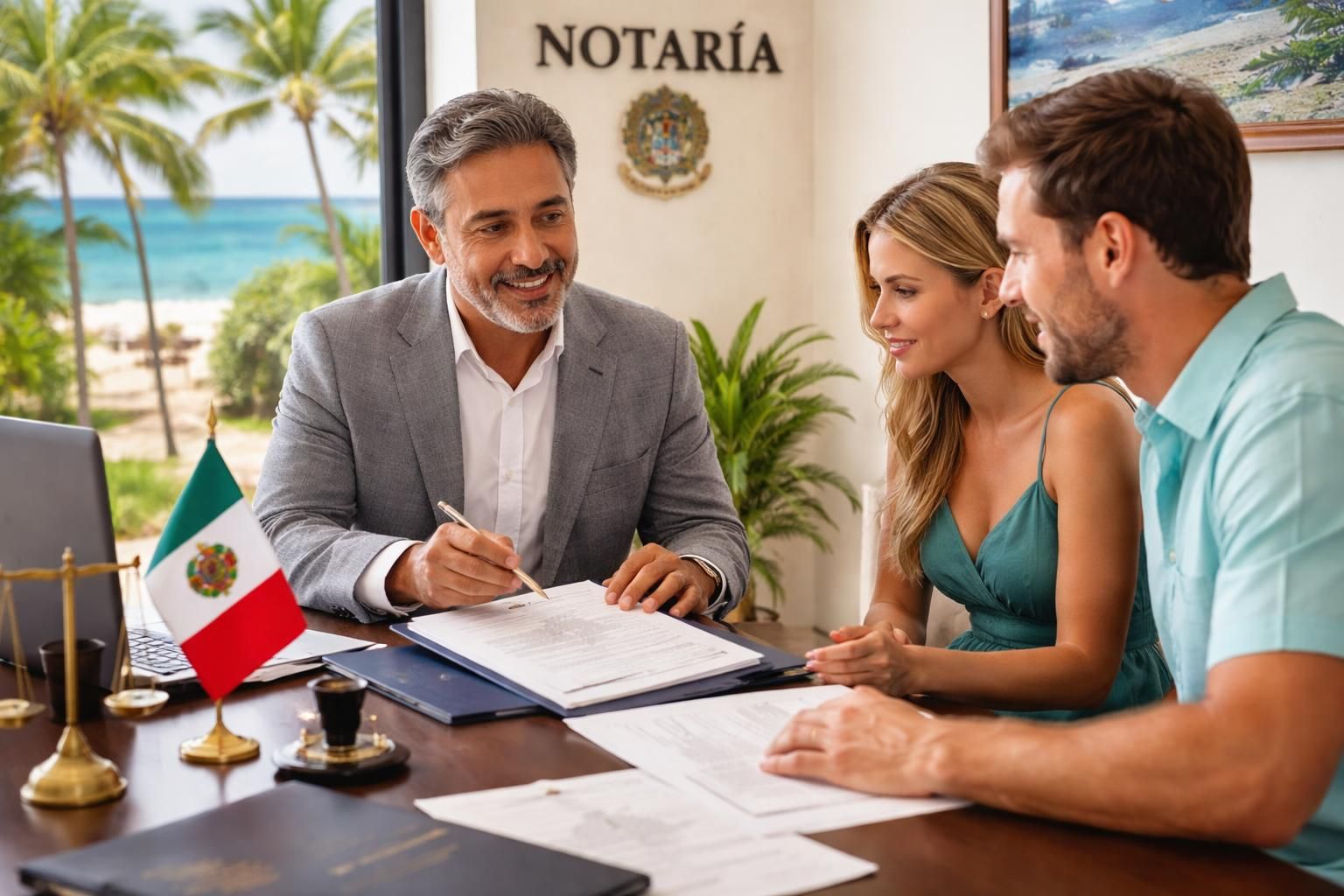
Essential Legal Documents for Due Diligence Before Property Purchase in Mexico
Due diligence is critical to a successful Mexico real estate transaction, and understanding the required legal documents serves as the foundation. Potential buyers must secure and carefully review a set of key documents to verify the legitimacy and status of the property before committing financially.
The centerpiece document is the title deed (escritura pública). This certified legal document evidences ownership and is issued exclusively by a Mexican notary public. It includes detailed information about the property’s boundaries, prior ownership, and any liens or encumbrances that might affect ownership rights. A thorough check ensures that the property is officially registered and free from legal claims, protecting the foreign buyer’s investment.
Alongside the title deed, the purchase agreement (contrato de compraventa) outlines the negotiated terms of sale, payment schedule, and conditions mutually agreed upon by buyer and seller. While this agreement is binding, the final and most authoritative document remains the notarized public deed executed at closing.
Property taxes (“predial”) clearance documents are another crucial element. Foreign buyers must ensure that property tax payments are current and outstanding debts are cleared, as unpaid taxes can delay sale registration or even introduce litigation risks. Utility bills and homeowner association fees should also be verified to guarantee there are no hidden liabilities tied to the property.
A checklist of essential documents includes:
- Valid title deed (escritura pública) verified by a notary public
- Clearance of property taxes (predial receipts)
- Purchase agreement with clear terms
- Proof of payment for utilities and homeowners association fees
- Certificate of no liens or encumbrances
- Bank statements to comply with source of funds verification
- Power of attorney documents if closing remotely
Each document must be authentic and properly registered to prevent future disputes. For instance, discrepancies in property tax payment history or lien certificates can severely impede ownership transfer and lead to expensive legal battles. The diligence process may seem intensive but is indispensable. It enables buyers to step confidently into ownership, knowing that all compliance checks are complete and legally sound.
Role of the Notary Public and Mandatory Registration in Mexico’s Property Purchase
Dealing with Mexican property purchase means navigating a legal system where the role of the notary public is central and indispensable. Unlike in other jurisdictions where notaries are mere formality-window clerks, Mexican notaries are highly specialized public officials empowered to authenticate and validate all deeds, contracts, and legal documents involving real estate transactions.
The notary public oversees the entire final purchase process, ensuring compliance with all laws, confirming the buyer’s identity, and assessing that the property is free of debts or legal claims. They prepare the escritura pública, which is registered in the public registry and serves as incontrovertible evidence of your ownership. Mistakes or omissions at this stage can have long-lasting repercussions, so their involvement is not optional but mandatory under Mexican law.
For foreign buyers especially, reliance on a notary public provides legal assurance that the acquisition aligns with local regulations. The notary also typically calculates closing costs and applicable property taxes, giving buyers upfront clarity on financial obligations beyond the property price.
For a comprehensive look into how a notary public differs from a real estate lawyer, including their interconnected but distinct roles in protecting buyers, consult resources such as expert explanations on notary versus lawyer roles. This distinction is crucial in real estate transactions for foreigners unfamiliar with Mexico’s legal system.
Ongoing Legal Considerations, Property Taxes, and Buyer Responsibilities After Purchase
Closing a property purchase is not the end of your legal responsibilities as an owner; it heralds the beginning of ongoing obligations that are essential to maintain your ownership rights and ensure smooth property management.
Annual property taxes (predial) must be paid punctually; failure to do so can lead to fines or liens on the property, complicating resale or inheritance procedures. Owners of condominiums or communities typically pay homeowners association fees, which fund maintenance of shared spaces and are obligatory.
Foreign buyers should also be aware of insurance obligations, especially in coastal and hurricane-prone zones, where insurers may require specific coverage. Additionally, proper due diligence obligation extends to paying utility bills and ensuring no outstanding debts are attached to the property.
Maintaining comprehensive records of all payments and registration documents facilitates selling the property or securing financing later. Regarding taxation, sellers must obtain a Mexican tax ID (RFC) to comply with capital gains tax regulations and complete lawful sales transactions.
Below is a summary table illustrating the main ongoing fiscal responsibilities of property owners in Mexico:
| Obligation | Description | Frequency | Relevance to Foreign Buyers |
|---|---|---|---|
| Property Tax (Predial) | Annual tax imposed on property ownership by local municipalities. | Annual | Mandatory for all owners; must be current for sale transfers. |
| Homeowners Association Fees | Monthly or quarterly payments for communal maintenance in condos or gated communities. | Monthly/Quarterly | Essential to maintain property condition and legality of shared facilities. |
| Insurance Payments | Property and hazard insurance, often required in coastal areas. | Annual or as specified | Protects investments from natural disasters and liabilities. |
| Utility Bills | Payments for electricity, water, gas, and other services linked to the property. | Monthly | Prevents service interruption and legal claims against the property. |
Understanding these ongoing costs is fundamental to financial planning in Mexico real estate investing. Ignoring such duties can affect property ownership status and complicate future transactions.
Steps to Ensure Safe Property Purchase: Due Diligence and Avoiding Legal Pitfalls
Conducting thorough due diligence before signing any agreements is vital to protect yourself as a foreign buyer. Key steps include verifying the clean title of the property, checking that the seller’s ownership matches the title deed, and reviewing that no liens or unresolved debts apply.
One significant risk is the acquisition of ejido land, which refers to communal or agrarian land often lacking formal private title. Purchasing ejido land without proper legal documentation can lead to forfeiture claims and substantial financial loss. Therefore, buyers must confirm the property’s status through official registries and with the help of experienced legal professionals.
Additional steps to safeguard your purchase:
- Engage a reputable notary public early to review all legal documents.
- Obtain an independent title search report confirming ownership and title clean status.
- Verify tax payment history and clear any outstanding debts.
- Request formal utility and homeowner association clearances.
- Ensure your purchase contract includes clauses protecting your rights in case of developer delays or non-compliance.
- Use transparent banking channels to prove source of funds and prevent money laundering issues.
- If unable to be present at closing, prepare a legally compliant power of attorney for a trusted representative.
Following these steps enhances the security of property ownership and aligns you with Mexico’s legal requirements. Avoid shortcuts like using local nominees to hold title, as these arrangements expose buyers to high risks of loss and legal complications.
Can a foreign buyer directly own beachfront property in Mexico?
Foreign buyers cannot hold direct ownership within the ‘restricted zone’—areas close to coasts or borders. Instead, they must use a fideicomiso bank trust that allows them to legally control the property while the bank holds the title. This trust is renewable and grants comprehensive ownership rights.
What is the role of the notary public in Mexican real estate purchases?
The notary public authenticates all real estate transactions, verifies clean title and taxes, draws up the public deed (escritura pública), and ensures the deed is properly registered. Their involvement is mandatory and critical to legitimate property ownership in Mexico.
Is it necessary to have a Mexican tax ID (RFC) for buying or selling property?
While not mandatory for purchasing, obtaining an RFC is strongly advised because sellers need it for legally completing sales and paying capital gains taxes. It simplifies taxation and ownership registration procedures.
What due diligence steps should foreign buyers take before purchasing property?
Buyers should verify the clean title with a notary, confirm payment of property taxes and utilities, avoid ejido land unless fully privatized, ensure the purchase agreement is legally sound, and use proper banking documentation to prove the source of funds.
Can property ownership pass to heirs smoothly in Mexico?
Yes, but proper succession planning is essential. Fideicomiso trusts allow naming successor beneficiaries. Without clear designation in the trust or a Mexican will, inheritance may require protracted court proceedings.