The Riviera Maya has emerged as one of the most vibrant and promising real estate markets in Latin America, attracting investors from across the globe who seek to combine the pleasures of tropical living with sound property investment strategy. Encompassing the stretch of Caribbean coastline from Cancún to Tulum and beyond, this region benefits from rapid infrastructure enhancements, increasing tourism, and a growing expatriate community. For those aspiring to build a real estate portfolio in this dynamic market, understanding local nuances, investment potential, and property management essentials is crucial to capitalize on opportunities while mitigating risks.
Portfolio building in the Riviera Maya is not only about acquiring properties but about crafting a balanced collection of assets that maximize rental income, offer capital appreciation, and align with long-term financial goals. From pre-construction condos in Tulum’s burgeoning districts to turnkey villas in Playa del Carmen’s bustling neighborhoods, investors have myriad options tailored to diverse risk tolerances and yield expectations. Navigating the buying process, legal framework, and ongoing management responsibilities requires a detailed step-by-step approach backed by expert insight.
Key highlights for building a real estate portfolio in the Riviera Maya:
- Understand the impact of the new Tulum International Airport and Maya Train on regional growth and property values.
- Prioritize diversification within your portfolio across Riviera Maya sub-markets such as Playa del Carmen, Cancún, Puerto Morelos, and Bacalar.
- Evaluate properties for both gross rental yields (6–12%) and capital appreciation (8–12% annually) for a balanced return.
- Be aware of the fideicomiso bank trust system essential for foreigners intending to own property within Mexico’s restricted zones.
- Incorporate professional property management to sustain asset condition and optimize short-term and long-term rental income.
Analyzing Riviera Maya’s Real Estate Market: Foundations for a Strong Portfolio
Building a successful real estate portfolio in the Riviera Maya begins with a comprehensive understanding of its market characteristics. This Caribbean coast stretches roughly 130 kilometers, from Cancún’s highly urbanized zones to the more tranquil expanses near Tulum and Bacalar. A key catalyst behind the area’s real estate boom is its steady influx of about 15 million international visitors annually, facilitated by Cancún International Airport and, more recently, the new Tulum International Airport inaugurated in late 2023. The addition of direct flights from key cities worldwide has significantly broadened the pool of potential tenants and buyers.
The development of the Maya Train, a rapid transit rail linking Cancún to Palenque, has expanded access to previously remote inland areas. This infrastructure not only increases accessibility but also stimulates demand for properties beyond immediate beachfront communities. Investors should carefully consider the ripple effects of such major projects, as they directly influence appreciation rates and rental desirability.
Foreign buyer activity is notably strong, comprising around 60% of transactions. Mainly Canadians, Americans, Europeans, and Latin Americans find the region’s pricing attractive, with property values in 2026 reportedly 30–50% lower per square foot than in comparable coastal markets such as Florida or the Bahamas. Additionally, the Mexican peso’s exchange rate relative to the US dollar maintains an advantageous valuation for foreign investors. These economic factors create an exceptional environment for property investment.
Another foundational element for investors is understanding local tax regimes. Quintana Roo’s property taxes are among the lowest, averaging 0.1–0.3% of assessed value annually compared to the 1–2.5% typical in many US states. Acquisition taxes at closing typically run from 2–4%, and Mexico imposes no estate tax on foreign owners. Combined with attractive gross rental yields averaging 6–12%, and steady annual appreciation rates between 8–12%, the Riviera Maya offers compelling investment math.
Given these factors, successful portfolio building requires positioning investments across areas with distinct profiles and growth trajectories. Diversification maximizes resilience and optimizes returns, which leads us to the importance of choosing the right locations within the Riviera Maya.
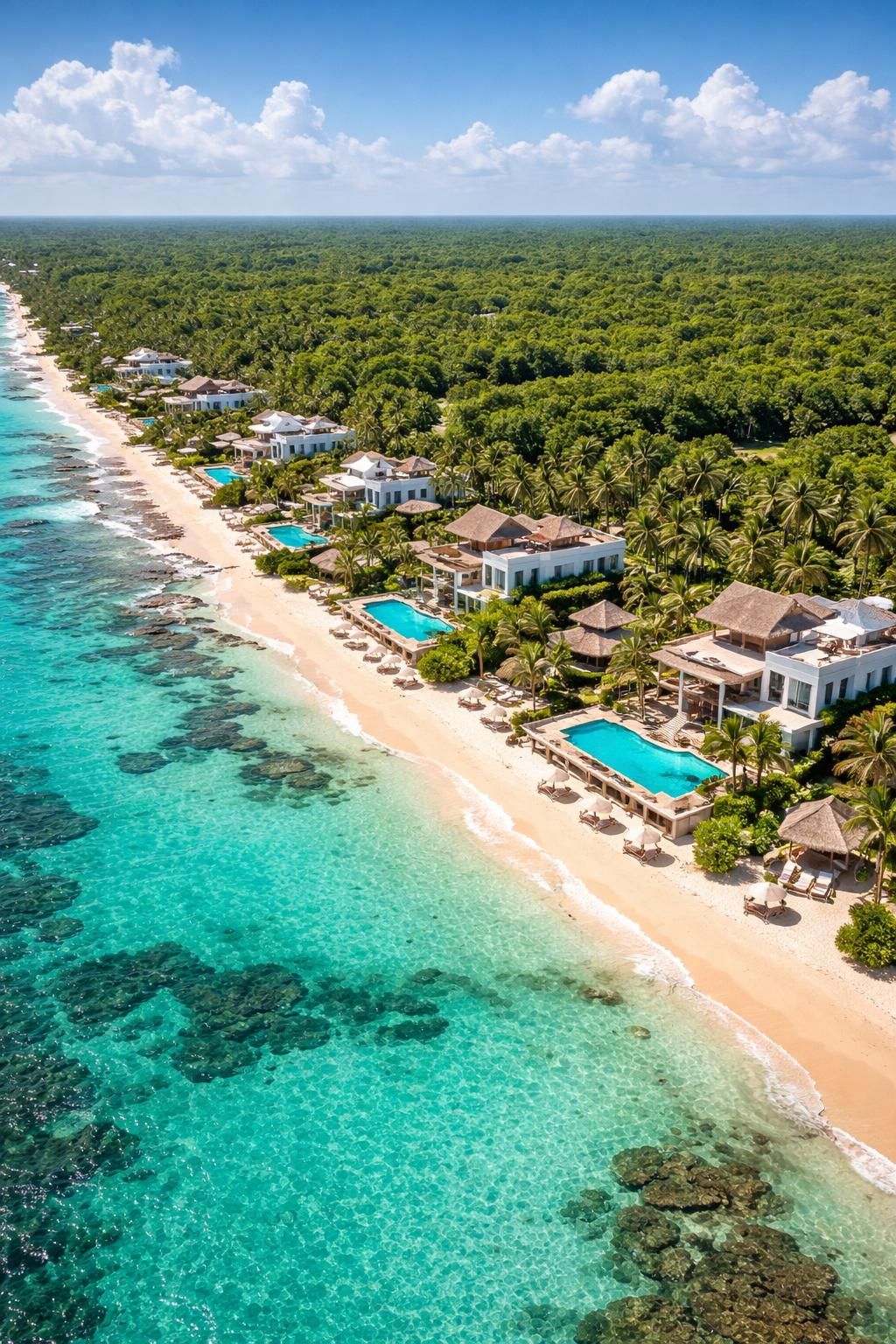
Choosing Strategic Locations: Mapping Investment Hotspots in the Riviera Maya
Every section of the Riviera Maya presents a unique opportunity in terms of pricing, rental demand, and potential for capital gains. For portfolio building, savvy investors balance these variables by allocating assets across multiple sub-markets, each with distinct characteristics.
Tulum: High-Growth Potential with a Boho-Luxe Appeal
Tulum is widely regarded as the fastest appreciating market on the Riviera Maya coast. The influence of the newly operational Tulum International Airport, combined with the proximity to the Maya Train, has accelerated infrastructure development and boosted property values. Neighborhoods such as Aldea Zama represent established master-planned communities, while La Veleta attracts design-minded buyers with upscale and modern condos. Region 15, meanwhile, offers entry-level options appealing to investors chasing speculative pre-construction gains. Prices vary widely, with pre-construction condos starting around USD $75,000, and turnkey two-bedroom units ranging from $120,000 to $220,000.
Rental yields in Tulum tend to be in the 8–12% gross range, though occupancy is more seasonal, peaking between January and April. Proper management and high-quality marketing are essential to capitalize on this peak season effectively.
Playa del Carmen: The Reliable Cash-Flow Engine
Playa del Carmen features the most steady rental demand year-round, thanks in part to direct accessibility via Cancún airport and a robust expatriate community. This area is attractive for portfolio diversification due to its liquidity and consistent occupancy rates. Areas like Playacar and beachfront gated communities such as Mareazul deliver luxury living with proven appreciation and rental demand. Condos in Playa del Carmen can be found from roughly USD $100,000 for studios, with oceanfront units typically priced between $195,000 and $490,000.
Investors prioritizing dependable cash flow often favor Playa due to its easier resale market and average gross rental yields between 6–9%. Understanding how to differentiate between short-term and long-term rental prospects is fundamental—see resource on rental profitability in Playa del Carmen for deeper insights.
Cancún: The Established Market with Premium Amenities
While often overlooked in favor of Tulum or Playa del Carmen, Cancún remains the region’s most mature market. Puerto Cancún’s marina and golf-centric developments and the iconic Hotel Zone are prized for holding property values solidly over time. Moreover, Cancún offers the best medical and educational infrastructure across the Riviera Maya, an advantage for retirees and families alike.
Condos near the airport offer undervalued long-term rental opportunities, routinely priced from $90,000. The Hotel Zone caters more towards short-term rentals with prices starting near $195,000.
Other Emerging and Niche Markets
Investors can also explore Puerto Morelos, offering beach access at 30–50% discounts compared to its neighbors, or Puerto Aventuras, a gated marina community with limited but steady inventory, ideal for buyers seeking security and amenities. Akumal, famous for its protected reef, offers quieter beachfront living with somewhat lower prices than Tulum. For those with a higher risk tolerance and interest in lakeside living, Bacalar represents the emerging frontier with prices starting under $100,000 for pre-construction lakefront lots.
| Area | Studio/1BR Condo | 2BR Condo | Villa/3BR+ |
|---|---|---|---|
| Tulum (Aldea Zama, La Veleta) | $90,000 – $135,000 | $135,000 – $245,000 | $245,000 – $735,000 |
| Playa del Carmen (Centro) | $100,000 – $160,000 | $145,000 – $295,000 | $295,000 – $590,000 |
| Cancún (Puerto Cancún / Hotel Zone) | $120,000 – $195,000 | $195,000 – $390,000 | $390,000 – $980,000 |
| Puerto Morelos | $110,000 – $160,000 | $145,000 – $270,000 | $220,000 – $590,000 |
Understanding the Buying Process: Legal and Financial Steps for Foreign Investors
Foreign investors face unique considerations when acquiring property in the Riviera Maya, particularly because all land within 50 kilometers of the coast is classified as Mexico’s “restricted zone.” This regulation means foreigners cannot hold direct property title but can secure ownership via a fideicomiso, a bank trust established with a Mexican financial institution. This trust grants full beneficial rights, allowing foreign owners to sell, rent, renovate, or bequeath the property just as if they held direct title. The fideicomiso is renewable every 50 years and remains a straightforward, secure method for ownership.
Setting up a fideicomiso generally costs between $500 and $1,500 USD, with an annual trustee fee ranging from $500 to $1,000. Buyers often prefer this structure over establishing a Mexican corporation unless purchasing multiple properties or commercial real estate. The entire closing process, including trust setup and Ministry of Foreign Affairs permits, usually spans 30–60 days.
Financially, investors should anticipate closing costs totaling approximately 5–8% of the purchase price, which covers acquisition taxes (2–4%), notary fees, registration fees, and trust establishment. Mortgage financing is available for foreigners through certain Mexican banks and developer-backed payment plans, though many investors opt to pay cash to streamline transactions.
Armed with this knowledge, investors can confidently move through the buying process. For those interested, further details on acquiring property in Playa del Carmen specifically are available in the step-by-step guide for foreign buyers, which clarifies legalities and process nuances in the local context.
Property Management Essentials: Maximizing Rental Income and Protecting Your Investment
Owning rental properties in the Riviera Maya requires an effective management strategy to preserve asset value and optimize income streams. Many investors are absentee owners, which elevates the importance of professional property management. Good managers coordinate maintenance, rental marketing, guest services, and financial reporting, mitigating risks that could lead to unexpected expenses or prolonged vacancies.
Short-term vacation rentals dominate the Riviera Maya market, particularly in tourist magnets like Playa del Carmen. However, managing these rentals demands consistent effort in guest communication and upkeep. Consequently, management fees typically range between 20–25% of rental income. Despite this cost, the return often justifies professional oversight, especially considering the seasonal swings in occupancy.
Net rental yields, after accounting for management fees, utilities, HOA dues, property taxes, and a 4% lodging tax, generally fall between 4–7%. Location quality and marketing brilliance can push these figures higher, particularly for waterfront condos with high-end finishes and strong online exposure.
Property management decisions directly influence portfolio returns. Efficient operations reduce wear and tear, boost repeat bookings, and elevate rental reviews, translating to higher returns over time. For those interested in further rental income optimization techniques and comparative analysis of rental strategies, detailed insights can be found in this comprehensive rental income guide.
Constructing an Investment Strategy: Step-by-Step Guide to Portfolio Building
Crafting a real estate portfolio in the Riviera Maya demands a disciplined, stepwise approach. Investors should develop a multi-year plan that balances acquisition timing, property types, and geographic diversification with personal financial goals.
Step 1: Define Clear Investment Objectives
Begin by articulating what you want from your portfolio. Are you seeking monthly cash flow, long-term property appreciation, or a blend of both? Understanding your risk tolerance and liquidity needs helps prioritize market sectors and property classes.
Step 2: Research Market Data and Trends
Leverage market reports, neighborhood analyses, and expert advice. Watch how developments like new airports and transport infrastructure influence pricing trends. Recognize that pre-construction investments often carry more risk but greater appreciation potential compared to turnkey properties.
Step 3: Select a Balanced Mix of Properties
Diversify by selecting properties in established areas like Playa del Carmen for stable cash flow and high-growth zones such as Tulum for long-term gains. Consider different property sizes and types – from studios suitable for transient tourists to luxury villas for affluent clientele.
Step 4: Secure Financing and Structure Ownership
Review financing options through Mexican or international lenders. Understand the cost-benefit between fideicomiso trusts versus Mexican corporations. Seek professional advice to optimize tax efficiency and legal compliance.
Step 5: Establish Professional Property Management
Hire reliable property managers with proven local expertise who will handle day-to-day operations and maintain high occupancy levels. Good management mitigates potential losses and maximizes rental income.
Step 6: Monitor Performance and Adapt Strategy
Continuously evaluate rental yields, expenses, and market shifts. Be ready to adjust your portfolio mix or sell underperforming assets. Staying informed and flexible is key to sustained success in this dynamic market.
Implementing these steps methodically builds a resilient and profitable real estate portfolio that leverages the unique advantages of the Riviera Maya’s evolving market.
Effectively, investors who embrace strategic location choices, comprehend the nuances of the buying process, and establish sound property management practices position themselves to maximize the benefits of Riviera Maya’s flourishing real estate market.
Can foreigners legally own property in the Riviera Maya?
Yes, foreigners can own property within the Riviera Maya by establishing a fideicomiso, a bank trust that grants equivalent rights to direct ownership. This structure is renewable and legally recognized by Mexican authorities.
Which areas in the Riviera Maya offer the best rental returns?
Tulum generally offers the highest gross rental yields ranging from 8–12%, while Playa del Carmen provides steadier year-round demand with yields typically around 6–9%. Puerto Morelos and other emerging areas may also offer attractive returns at lower price points.
What are the typical closing costs when buying property in Mexico?
Closing costs usually total between 5–8% of the purchase price. These include acquisition tax, notary and registration fees, fideicomiso setup fees, and legal expenses. Property taxes post-purchase remain relatively low, at about 0.1–0.3% annually.
How long does it take to complete the buying process?
Most property purchases in the Riviera Maya complete within 30 to 90 days. Establishing the fideicomiso and obtaining foreign ownership permits typically add an additional 30–45 days, but the process can run concurrently with other closing procedures.
Is professional property management necessary for rental income optimization?
Yes, especially for short-term vacation rentals popular in the Riviera Maya. Professional management ensures maintenance, guest communication, and marketing effectiveness, which are critical for sustaining high occupancy and maximizing net rental yields.