In the vibrant and ever-growing real estate market of Playa del Carmen, investors continuously weigh the benefits of short-term rental versus long-term rental strategies. Each approach offers distinct advantages influenced by factors such as rental income, occupancy rates, profitability, and market demand fluctuations. Playa del Carmen’s appeal as a travel destination, combined with its unique infrastructure and property variety, creates a dynamic rental market where savvy investors can maximize returns by selecting the optimal rental model tailored to their specific property and investment goals.
Briefly, the short-term rental market thrives on high nightly rates, strong seasonal demand, and flexibility, particularly appealing for vacation rentals, while long-term rentals offer steady income with less operational complexity. Understanding Playa del Carmen’s distinct zones, property types, and cost structures, including electricity expenses, becomes pivotal to fully grasp the real potential of rental income and overall profitability for both models in 2026.
Understanding the Profitability of Short-term Rentals in Playa del Carmen’s 2026 Market
Playa del Carmen stands out as the Riviera Maya’s most established short-term rental hub, combining nearly twenty years of investor presence with a consistent demand from tourists year-round. Short-term rentals leverage Playa’s attractive amenities, infrastructure, and strategic location only 45 minutes from Cancún International Airport, drawing over 5 million annual visitors. The pedestrian-friendly 5th Avenue and proximity to natural attractions like cenotes and the Cozumel ferry add significant appeal for travelers seeking comfort and accessibility.
Revenue potential in short-term rentals is buoyed by the ability to charge premium nightly rates, especially in beach-access complexes such as Aldea Thai and Coco Beach, where nightly average daily rates (ADR) can reach up to $340 USD. These premium properties attract generous gross incomes ranging from $14,000 to $80,000 annually depending on unit size and location. However, profitability must be considered net of expenses like management fees, cleaning, and significant operational costs, especially electricity bills.
The key to unlocking higher net returns in short-term rentals lies in strategic property selection and professional management. For example, complexes like Aldea Thai offer an electrical advantage with an independent transformer, significantly reducing electricity expenses by 40 to 60 percent compared to standard grid-connected buildings. This infrastructure benefit alone can add 1 to 2 percentage points to net ROI, alongside robust occupancy rates often ranging from 65% to 78% in well-managed properties. Professional managers use dynamic pricing, a vast channel mix including prominent brands like Marriott and Hyatt, and robust guest briefing to optimize both occupancy and rental income.
Despite the appealing returns, investors must consider regulatory and administrative factors carefully. In Playa del Carmen, condo associations regulate short-term rental permissions, not the government, which means investors should demand verified written confirmation from HOAs before purchase. Lacking this may risk restrictions that could severely impact projected returns. Furthermore, the seasonality of rentals, with peak periods in winter and during Holy Week bringing near 100% occupancy, requires diligent calendar management to capitalize on high-demand windows without sacrificing long-term occupancy.
Overall, short-term rentals in Playa del Carmen offer higher gross revenue potential and the flexibility for property owners to use their units personally. However, the success of this model depends strongly on location, operational sophistication, and upfront investment in infrastructure adaptation such as solar panels or energy-efficient A/C setups to reduce ongoing costs.
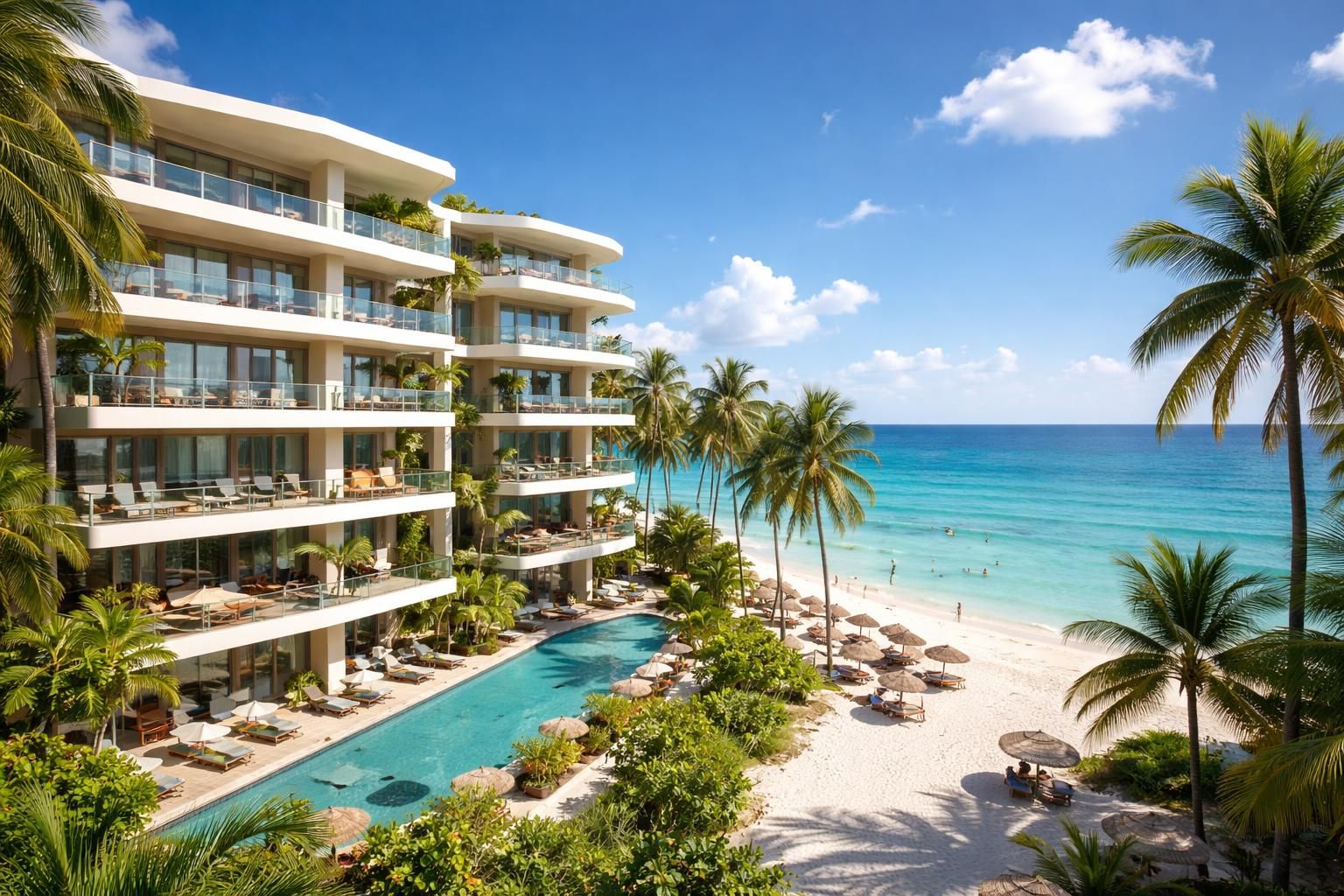
Evaluating Long-Term Rentals: Stability and Predictable Income in Playa del Carmen
While short-term rentals offer high rental income during peak seasons, long-term rentals provide a contrasting model prioritizing consistent cash flow and reduced managerial burdens. In Playa del Carmen’s 2026 real estate environment, long-term rentals cater predominantly to local residents, expatriates, and workers in the growing urban and tourism sectors, especially in neighborhoods such as Playacar Phase 2 and the Centro area near 5th Avenue.
Entry-level one-bedroom long-term rentals in North PDC and Centro often start at lower price points from $130,000 to $280,000, appealing to tenants seeking affordability combined with amenities. Typical net ROI for long-term rentals ranges between 4% and 10%, lower than premium short-term rental properties but with simpler operational requirements and reduced vacancy risks. Monthly rent guarantees stability and ease of financial planning, appealing to risk-averse investors.
From an operational perspective, long-term rental income is less influenced by seasonality or fluctuating occupancy rates. Tenants usually sign leases ranging from six months to multiple years, reducing turnover, cleaning costs, and property wear due to frequent guest changes, which commonly affect short-term rentals. This stability often appeals to property owners supplementing investment portfolios with quieter, lower maintenance assets.
However, the trade-off includes limitations in rental income growth and less flexibility for personal use. In areas like Playacar Phase 2, significant restrictions on short-term rentals mean investors may find themselves limited to long-term strategies despite lower yield potentials. The steady appreciation of Playa del Carmen’s property values by 12% to 26% between 2020 and 2025 supports long-term investment, but investors must weigh this against relative rental income constraints.
For many, long-term rentals serve as a complementary strategy to balance a portfolio against the operational intensity and market risk of vacation rentals. Moreover, as a market expert would advise, knowing the safety and legal framework of property purchase in Playa del Carmen is crucial before committing funds to any strategy.
Comparative Cost Analysis: Electricity and Management Impact on Rental Profitability
One of the most critical but often underappreciated factors affecting both short-term and long-term rental profitability in Playa del Carmen is the cost associated with electricity. The local utility, CFE, uses a progressive rate system where consumption beyond certain thresholds experiences steep price jumps. For a busy, well-occupied short-term rental unit, monthly electricity can range from $300 to $600 USD, drastically eroding net profits if not properly managed.
Innovative solutions have emerged as essential differentiators in 2026. Properties equipped with inverter mini-split A/C units, smart thermostats, or independent transformers dramatically reduce electricity expenses. For instance, Aldea Thai’s independent transformer reduces annual electricity costs to as low as $1,000–$2,200 compared with $2,400–$5,400 in standard CFE grid buildings. Solar installations further reduce bills, with 3kWp grid-tied systems capable of saving $2,000–$4,400 annually, paying back initial investments within 3–5 years.
Management style is another significant variable impacting net rental income. Self-management tends to limit exposure to 1–3 platforms and sets occupancy rates in the 40–55% range with static pricing, whereas professional property management in Playa del Carmen reaches over 40 sales channels, including Marriott and Hyatt, pushing occupancy to 65–78% with dynamic pricing techniques. This often results in an additional $10,000 to $14,000 USD in net rental income annually on similar properties after management fees.
| Factor | Self-Management | Professional Management (Playa Moments) |
|---|---|---|
| Platform Reach | 1–3 platforms | 40+ including Marriott & Hyatt |
| Annual Occupancy | 42–55% | 65–78% |
| Nightly Rate vs. Market Floor | Static Pricing | Dynamic Pricing +15–35% |
| Electricity Management | Uncontrolled | Guest Briefing + Smart Controls |
| Typical Net Income (1BR Beach) | $3,000–$8,000/year | $14,000–$22,000/year |
Understanding these operational costs and management impacts is essential for investors to accurately gauge true profitability, avoiding overly optimistic estimations based only on gross rental income. Those considering an investment might also find it helpful to review the latest Airbnb regulations in Playa del Carmen for comprehensive compliance and maximized returns.
Identifying Ideal Properties and Neighborhoods for Maximum Rental Income
Choosing the right property type and location is paramount when aiming to maximize either short-term or long-term rental income. Playa del Carmen offers diverse sub-zones, each with unique profiles impacting rental demand, occupancy rate, and profitability.
The best-performing vacation rental complexes are often beach-access, such as Aldea Thai and Coco Beach, where the synergy of ocean proximity, exclusive amenities, and efficient utilities generate net ROIs between 7% and 13%. Properties here command the highest ADR, fueled by premium tourist demand and superior guest experiences. The gated community of Playacar Phase 1 targets longer-stay families, providing stable bookings albeit at slightly lower turnover than short city-break focused zones.
On the other hand, residential zones like Playacar Phase 2 and North PDC typically attract long-term tenants, reflecting lower yet more predictable rental income. These areas often enforce short-term rental restrictions, making them more suitable for conventional leasing.
Below is a breakdown of key Playa del Carmen zonas with typical entry prices and net ROI potential for 1-bedroom units.
| Sub-Zone | 1BR Entry Price (USD) | Net ROI (%) | Notable Characteristics |
|---|---|---|---|
| Beach-Access Complexes (Aldea Thai, Coco Beach) | $200,000–$400,000 | 7–13% | High yields, premium vacation guests, Marriott/Hyatt eligibility |
| Centro / 5th Ave | $150,000–$280,000 | 5–10% | Lower entry price, strong for digital nomads and city guests |
| Playacar Phase 1 (Gated, Beach Adjacent) | $280,000–$550,000 | 7–12% | Family-oriented, gated community, some STR restrictions |
| Playacar Phase 2 (Residential) | $250,000–$480,000 | 4–8% | Primarily long-term, substantial STR restrictions |
| North PDC (Ejidal / Calle 40+) | $130,000–$240,000 | 5–9% | Entry-level, farther from beach, less proven demand |
Investors are encouraged to consider their budget, desired level of involvement, and preferred tenant or guest profile when choosing between these zones. Our local expertise at Playa Realtors can guide buyers towards the best options aligned with their investment goals, especially when evaluating the best areas for rental income opportunities in Playa del Carmen.
Strategies to Optimize Rental Income: Management, Pricing, and Seasonality
To extract the highest profitability from either rental model, maximizing occupancy rates and optimizing rental income through strategic pricing and management are essential. Playa del Carmen’s peak season runs from mid-December through April, yielding occupancy rates of 85% to nearly 100% in beach-access areas during peak periods such as Holy Week. Capitalizing fully on these high-demand stretches requires advance planning, including minimum stay requirements and premium pricing.
Conversely, the low season from September to October sees occupancy dipping to 28%-50%, demanding creative marketing to attract digital nomads and long-stay tenants via discounted rates. This season also provides an opportunity for property maintenance without significant loss of revenue. For example, targeted monthly discounts for longer stays can maintain steady occupancy and rental income during quieter months.
Leveraging professional management benefits at this stage is critical. Advanced channel management across over 40 platforms ensures properties are visible to a diverse audience globally. Dynamic pricing tools enable nightly rates to be adjusted in real time, optimizing revenues relative to demand. Furthermore, smart home technology for climate and electricity control helps reduce operational costs while improving guest satisfaction.
- Maintain minimum stays during peak seasons to maximize nightly rates and booking certainty.
- Offer targeted long-stay discounts during shoulder and low seasons to encourage steady income.
- Invest in professional photo shoots and 360° virtual tours for better listing appeal.
- Utilize multi-platform listings, including Marriott and Hyatt branded channels for greater exposure.
- Integrate energy-saving technologies like inverter A/C units and solar panels to slash utility costs.
These strategies collectively enhance rental income and overall profitability, reinforcing Playa del Carmen’s strength as a market for lucrative real estate investment. Such an approach not only improves financial performance but also aligns with evolving tourist preferences and regulatory requirements.
Is short-term rental always more profitable than long-term rental in Playa del Carmen?
Short-term rentals usually generate higher gross rental income due to premium nightly rates, but when accounting for higher management, cleaning costs, and electricity bills, the net profitability gap narrows. Long-term rentals can provide stable, predictable income with less operational hassle, making them attractive for different types of investors.
What should investors verify about property rules before purchasing for short-term rental?
Investors must obtain written confirmation from the condominium HOA regarding short-term rental permissions, as restrictions vary widely and some buildings have recently imposed bans or limits on vacation rentals. Ignoring this step can jeopardize rental income.
How does electricity impact rental income in Playa del Carmen?
Electricity is a major expense affecting net returns, particularly for short-term rentals with high occupancy. Properties with independent transformers or solar panels significantly reduce these costs, thereby widening profit margins and increasing net ROI.
Can property owners personally use their short-term rental units?
Yes, owners can block personal stays without commission through professional management portals, typically allowing 4 to 8 weeks of personal use annually while maintaining a healthy net ROI from remaining rental income.
How soon can a new short-term rental property expect stable occupancy?
New properties generally reach steady-state occupancy within 4 to 6 months, with the first year yielding roughly 75-85% of mature income levels as the unit builds reviews and repeat guest base.