In recent years, Playa del Carmen has become one of the hottest real estate markets in Mexico, attracting international buyers seeking investment security and paradise living. However, alongside rapid development and soaring demand, the region has seen an alarming rise in real estate scams. These schemes often target foreigners unfamiliar with local legal frameworks, creating a landscape where property fraud thrives if buyers lack proper due diligence. Understanding how to avoid scams is essential not only to protect your investment but also to navigate the complex processes of title verification, permits, and agent credentials with confidence.
Real estate safety in Playa del Carmen depends largely on awareness and sensible action. Among the most prevalent issues are illicit sales involving ejido land, fake deeds, properties without necessary permits, unfinished developments, and unlicensed agents. Each scam tactic exploits gaps in buyer knowledge and legal loopholes. Buyers must learn to spot red flags, engage verified agents, and insist on legal advice from independent notaries and attorneys who prioritize buyer protection over sales commissions. In this article, we dissect the major risks and present clear strategies to avoid falling prey to real estate scams in Playa del Carmen.
Understanding Ejido Land Fraud: The Hidden Danger in Playa del Carmen Real Estate
One of the most dangerous and complicated pitfalls in the Riviera Maya’s real estate market is the fraudulent sale of ejido land. Ejido is a form of communal land ownership under Mexican law that restricts sales to foreigners or non-members of the ejido community. Despite this, numerous scams unfold where sellers offer ejido property under false pretenses or using counterfeit documents, luring buyers with prices often 50 to 70 percent below market value. For example, a property listed at $300 per square meter in Tulum, compared to the typical $1,800 to $2,800 per square meter, is a clear warning signal.
Buyers enticed by a low price may not realize they are investing in land they cannot legally own. Courts in Mexico consistently annul sales of ejido land to foreigners, resulting in complete loss of investment without recourse. This scam remains widespread, in part because of buyers’ misplaced trust in verbal assurances that “the ejido privatization process is underway,” a process that frequently takes years and often fails to materialize.
How to Detect and Prevent Ejido Land Fraud
- Insist on obtaining a Certificado de Libertad de Gravámenes from the Public Registry, which proves clear ownership free of liens.
- Have your independent notary formally verify the ejido status through the Registro Agrario Nacional (RAN). No transaction should proceed without this certificate confirming the property is not ejido land.
- Be skeptical of “private” land claims where sellers avoid supply of official deeds or contract documents for independent review.
- Beware of prices that dramatically undercut the market value—such bargains are often too good to be true.
Always remember that in the Playa del Carmen market, buyer protection begins with verifying land status independently. Avoiding ejido fraud not only protects your financial interests but also ensures a legally recognized ownership that holds value.
Title Verification and Avoiding Fake Deeds in Playa del Carmen Real Estate
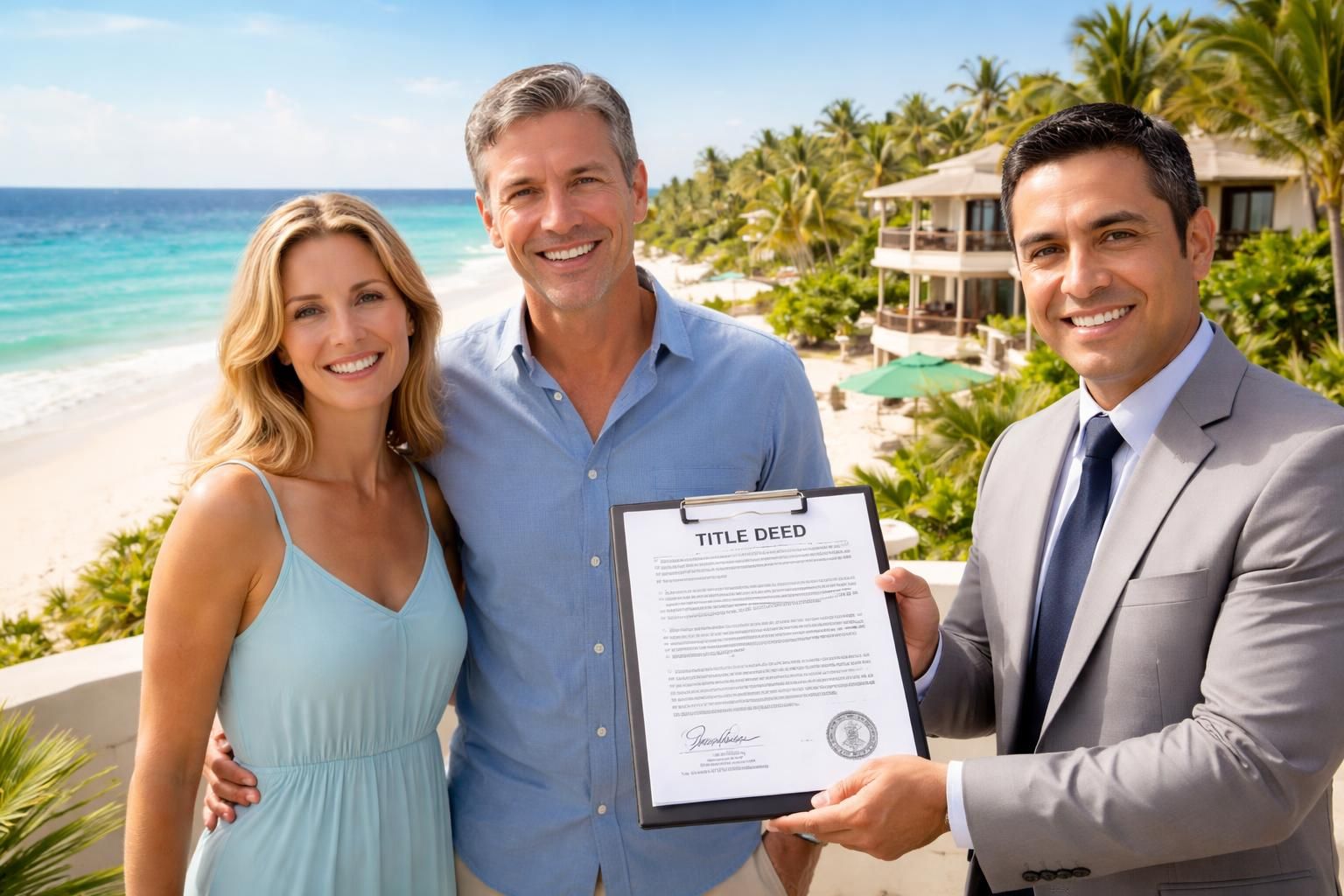
Title fraud is another significant threat to foreign buyers in Playa del Carmen and the broader Riviera Maya area. In many cases, the same property is sold multiple times to unsuspecting buyers through fake or manipulated deeds. Without proper due diligence, buyers may discover legal disputes, liens, or invalid ownership only after substantial sums have been paid.
Reliable verification comes only from obtaining a Certificado de Libertad de Gravámenes, issued by the Public Registry of Property in Quintana Roo. This certificate reveals current ownership status, any mortgages, liens, or legal restrictions. Moreover, your independent notary must conduct a thorough title search tracing all previous ownership transfers over at least two decades or back to original ejido conversion if applicable. Gaps or inconsistencies in ownership history are major red flags.
Best Practices for Title Due Diligence
- Engage a trusted, independent notary rather than relying on the developer’s or seller’s notary to represent your interests.
- Request a detailed title chain report covering 20+ years of ownership history—never accept incomplete documentation.
- Use professional legal advice to interpret registry data and assess any risks related to liens or encumbrances.
- Do not proceed with payment until all documents have been verified and cross-checked with government registries.
International buyers often mistakenly believe they can verify titles themselves online. While Mexican states provide some registry services, the information is typically incomplete and only in Spanish, making professional assistance essential. Following this careful and structured approach is crucial to avoiding property fraud and safeguarding your investment in Playa del Carmen.
Securing Property Permits and Avoiding Illegal Construction Fraud
Another widespread problem is the sale of properties that lack proper building permits or violate environmental regulations. Significant parts of Playa del Carmen, Tulum, and surrounding Riviera Maya areas have seen properties built without municipal authorization or on protected lands such as Jaguar Park buffer zones or cenote preservation areas. These illegal constructions create serious risks for buyers attempting utility setup, approval for renovation, or eventual resale.
SEMARNAT, Mexico’s environmental authority, has ordered demolitions of unpermitted buildings in protected areas multiple times. A buyer who purchases a property without verified permits faces possible fines, demolition risks, and inability to connect public utilities such as electricity or water, since the Comisión Federal de Electricidad (CFE) requires proof of permits for service activation.
Essential Permits to Verify for Playa del Carmen Property
| Permit Name | Description | Significance for Buyer |
|---|---|---|
| Certificado de Uso de Suelo | Zoning certificate confirming permitted uses (residential, commercial, rental) | Ensures property use aligns with buyer’s intentions |
| Licencia de Construcción | Building permit authorizing construction matching the existing structure | Validates legal construction, avoiding future municipal fines |
| SEMARNAT Authorization | Environmental clearance for properties near cenotes, wetlands, or protected areas | Prevents environmental penalties or demolition orders |
| Manifestación de Impacto Ambiental | Environmental impact statement for larger developments | Ensures compliance with environmental standards |
Work with an independent notary or legal professional who can obtain these official permits from municipal offices. Do not rely on seller promises that “permits are pending” as verbal assurances carry zero legal weight. Verifications in writing protect you from unexpected losses and ensure investment security.
Risks of Unfinished Developments and How to Safeguard Your Investment
Purchasing pre-construction or off-plan properties in Playa del Carmen might appear attractive, often advertised with enticing price points or payment plans. Unfortunately, this segment harbors some of the highest risks involving real estate scams. Many developers take deposits from multiple buyers but fail to complete projects due to financial insolvency, permit denials, fund diversion, or outright fraud.
Buyers discovering halted construction after deposit payments frequently find themselves unable to recover funds, as contracts typically designate deposits as non-refundable and label buyers as unsecured creditors in bankruptcy situations. Even with the 2025 Anti-Money Laundering reforms and the new developer registry in Quintana Roo, protections remain limited.
Key Steps to Avoid Falling Victim to Unfinished Development Schemes
- Limit deposits to 5-10% of purchase price before confirming project completion.
- Insist that deposits be placed in a third-party escrow account rather than the developer’s operating bank account.
- Verify the developer’s registration in the Registro Único de Desarrolladores Inmobiliarios maintained by the state.
- Have a Mexican real estate attorney review all contracts before signing to ensure buyer protections and clear timelines.
By applying these rigorous safeguards, buyers can significantly reduce the risk of losing their investment to stalled or fraudulent developments. Understanding the local real estate market’s nuances and the importance of contractual clarity forms the cornerstone of prudent purchasing.
Ensuring Real Estate Safety Through Verified Agents and Legal Advice
In Playa del Carmen, a frequent source of property fraud arises from unlicensed real estate agents and fake agencies. Mexico doesn’t have a national licensing system for real estate professionals; however, Quintana Roo has recently introduced a state law mandating agents to hold a license issued by SEDETUS (Secretaría de Desarrollo Territorial Urbano Sustentable). Operating without this license risks heavy fines and increases fraud likelihood.
This new regulation aims to protect buyers by creating a registry of verified agents and condominium administrators. Buyers must verify any agent’s credentials on the official SEDETUS website before proceeding with transactions. Even reputed agents affiliated with large companies or local chambers of commerce may lack mandatory licenses, concealing major risks. For instance, in a case reported in 2025, a vice-president of the Playa del Carmen Chamber of Commerce operated as an agent without the required SEDETUS license.
Benefits of Working Only with Licensed Agents
- Contracts facilitated by licensed agents are legally enforceable.
- License holders are accountable to the state and subject to disciplinary action
- Reduces exposure to fraudulent schemes like double sales or forged documents.
- Facilitates collaboration with licensed attorneys and verified notaries, ensuring full legal compliance.
You can check real estate agent registration status here: https://asesores.sedetus.gob.mx/consultaAsesores. Always conduct this due diligence to maintain real estate safety throughout your buying process.
Furthermore, engaging an independent notary and obtaining comprehensive legal advice protects your interests. The false belief that the developer’s or agent’s notary is independent is a common trap. For the cost of a few thousand dollars, an independent notary thoroughly reviews every document, title, and permit to ensure your purchase is sound.
For additional insights on the safety of living and investing in the region, visit this detailed guide on Playa del Carmen’s safety for expats and families.
What are the most common real estate scams in Playa del Carmen?
The top scams include ejido land fraud, fake deeds, properties without permits, unfinished developments, and unlicensed agents. Engaging an independent notary and performing thorough legal due diligence are essential to avoid these risks.
Can foreigners legally buy ejido land in Mexico?
No. Ejido land is communal and cannot be sold to foreigners under Mexican law. Any sale claiming otherwise is likely fraudulent and void. Verification through the Registro Agrario Nacional (RAN) is mandatory before purchase.
How do I verify if a property has proper building permits in Playa del Carmen?
Your independent notary can obtain official permits from the municipal planning office, including zoning certificates and building permits. Never rely on verbal assurances; documentation must be in writing to ensure legality.
What should I do if a developer stops construction on my pre-construction project?
Review your contract carefully, consult a Mexican real estate attorney, and file a complaint with PROFECO, the Federal Consumer Protection Agency. For future purchases, limit deposits and require escrow to protect your funds.
How can I verify a real estate agent’s license in Quintana Roo?
Use the SEDETUS online registry at https://asesores.sedetus.gob.mx/consultaAsesores. Only agents listed there legally operate in Quintana Roo. AMPI membership alone is insufficient.